





Oxford College Gardens and Cambridge College Gardens

|

|
| Oxford College Gardens, Tim Richardson (author) and Andrew Lawson (photographer), White Lion Publishing, 2018, 320 pages, hardback, fully illustrated. | Cambridge College Gardens, Tim Richardson (author), Clive Boursnell and Marcus Harpur (photographers), White Lion Publishing, 2019, 320 pages, hardback, fully illustrated. |
The garden heritage of the Universities of Oxford and Cambridge is now available in two very handsome publications that have been researched and written by a leading garden historian, and illustrated with the work of equally eminent photographers. This is a substantial topic considering the age of most of the colleges and the degree of change that has taken place. The inner cores of the most ancient foundations go back 500 years or more. Richardson finds room for much of the historical background without deviating from the main aim of providing a sumptuous picture book with commentary on the gardens as they are seen today. Descriptions include both architecture and landscape, which are indivisible, and the distinctive character of each of the colleges is analysed on this basis.
The Oxford volume, with 34 chapters, includes the Oxford Botanic Garden – the oldest in Britain, with one of the most extensive plant collections in the world – as well as the colleges. Victorian and more modern colleges are assessed, with reflections on how taste evolved from the classic arrangements of cloisters and lawns to more varied spaces. The volume depicts the vital interplay between buildings and their natural settings. Also addressed is the underlying raison d’être of the gardens: the preservation of calm within college walls and surrounding meadows, such as those of Magdalen, to provide a safer, healthier location for prayer and study in the midst of an urban setting with its bustling streets and marketplaces. Clear maps of each college and a collective map shows how they fit together within the urban form.
The Cambridge volume features 27 gardens. The pair is complementary except that the newer book is on a bigger page format so that the two sit unevenly together on the shelf. The same high praise goes to the author for his research and written fluency. Both books have a selection of David Loggan’s prints and colour pictures of plantings, lawns and trees against backgrounds of quadrangles, college walls, gateways, bridges and water meadows. The styles of planting are wide-ranging, including palms and bananas at Selwyn College and wildflower meadows at Lucy Cavendish College. There are notable trees and great swathes of climbing plants are carefully trained against the ancient college walls.
Yet Cambridge has more than 27 institutions with worthwhile gardens. St Catharine’s College, perhaps the finest of the modern landscapes, is represented in these pages by a single shot only, and Westcott House is a notable absentee among several foundations mainly devoted to religious training (as all the ancient colleges once were). Whether open to the public, or for private use by masters, fellows or porters, and whether traditional or innovative, these gardens share one thing in common: their importance as places for improving the quality of life of their communities.
This article originally appeared as ‘Study and prayer’ in Context 167, published by the Institute of Historic Building Conservation (IHBC) in March 2021. It was written by Graham Tite, conservation officer.
--Institute of Historic Building Conservation
Related articles on Designing Buildings Wiki
- Cambridge market.
- Conservation.
- Gardens Trust.
- Hardy Plants and Plantings for Repton and Late Georgian Gardens (1780-1820).
- IHBC articles.
- Institute of Historic Building Conservation.
- Intensifying development in Oxford.
- Oxford conservation projects.
- Oxford's open spaces.
- Reorganising and conserving Oxford's Mitre site.
- Significance and heritage protection at Cambridge Market.
- The landscapes of Cambridge.
- Walled kitchen gardens of the Isle of Wight.
IHBC NewsBlog
IHBC sponsors Gardens Trust event 23-4 Sept 2026
.jpeg)
'Learning from the Past, Shaping the Future’ takes place in Milton Keynes
Renovations to Frank Lloyd Wright's Fallingwater complete
.jpg)
World Heritage Preserved project opens house for tours again
Shakespeare Birthplace Trust places Hall's Croft on HAR Register
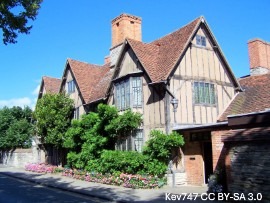
Stratford-upon-Avon home of Shakespeare's daughter is 'At Risk'
Lady Grange’s House repaired on St Kilda
.jpg)
National Trust for Scotland repairs stone cleit with link to famous island resident
Griff Rhys Jones on BBC Radio 4 Today programme
,_Green_Lane,_Derby.jpg)
The Victorian Society’s President unveiled its latest Top Ten Endangered Buildings 2026.
Need a MATE? Book your place now.

IHBC offers free webinars on applying for IHBC accreditation (Full & Associate).
UK Stained Glass Repository finds windows new homes

How are stained glass windows are rescued, stored and repurposed?
APPGEBE report sets high aims for quality
'Government must not sacrifice quality in drive to build 1.5m homes'
New measures protect Historic Shipwrecks from heritage crime

Underwater cultural heritage benefits from new HE guidance
How could the City of London skyline look in 6 years' time?

Visualisation shows approved planning applications as completed buildings
National Trust for Scotland calls for VAT cuts

Heritage neglect is encouraged by current policies
IHBC's 'Context' Issue 186 features Industrial Heritage

IHBC's members' journal reports on the challenges of conserving infrastructure
Book now for IHBC Annual School 2026

IHBC Annual School is taking place 18-20 June 2026 in Newcastle
RICHeS Research Infrastructure offers ‘Full Access Fund Call’
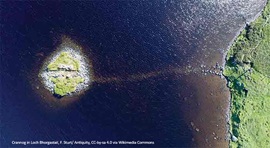
RICHeS offers a ‘Help’ webinar on 11 March
Latest IHBC Issue of Context features Roofing
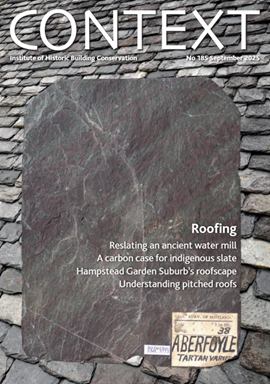
Articles range from slate to pitched roofs, and carbon impact to solar generation to roofscapes
Three reasons not to demolish Edinburgh’s Argyle House

Should 'Edinburgh's ugliest building' be saved?
IHBC’s 2025 Parliamentary Briefing...from Crafts in Crisis to Rubbish Retrofit
IHBC launches research-led ‘5 Commitments to Help Heritage Skills in Conservation’
How RDSAP 10.2 impacts EPC assessments in traditional buildings

Energy performance certificates (EPCs) tell us how energy efficient our buildings are, but the way these certificates are generated has changed.